CARNALISMO


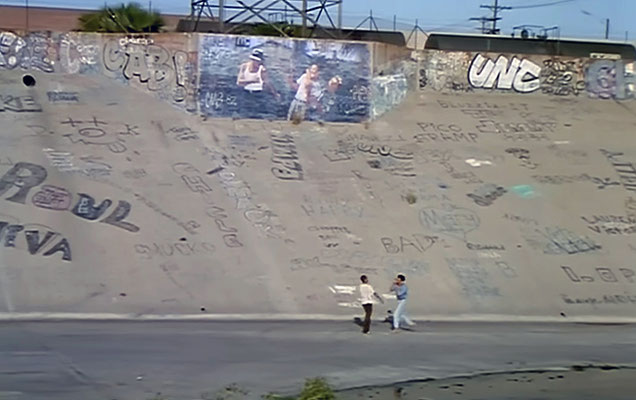
© Blood In Blood Out Movie Screens, Courtesy of The Disney Company, 1993
Significance, Cultural & Content Aspects
Carnalismo is widely regarded as Adan Hernández’s most important work. Measuring an impressive 9 x 4 meters (354 x 157 inches), it is not only his largest painting but also one of his most powerful. The mural’s appearance in the final scene of Blood In Blood Out — paired with Bill Conti’s stirring score — leaves an unforgettable impression on viewers.
To create the piece, Adan used a reference image featuring actors Benjamin Bratt, Damian Chapa, and Jesse Borrego in a scene from the film’s beginning — a moment of youth and innocence before the characters’ lives diverge. It evokes a universal human reflection: “What if?” What if we had chosen differently? What if we had paused, thought longer, and acted with more restraint? This idea — the weight of impulsive decisions and their lasting consequences — lies at the heart of the film and the painting itself.
The word Carnalismo defies direct translation, though it most closely means a kind of brotherhood — a deep bond between men who are more than friends, united by shared blood, language, and lived experience, whether related or not.
Whether Adan knew he was creating his masterpiece is impossible to say. True artists often work by instinct, guided by intuition rather than intention. Though the concept of the mural may have existed in the script, its execution — its emotional precision, symbolism, and sheer visual power — was pure genius. Only Adan Hernández could have created it.
In Carnalismo, urban graffiti meets classical composition. Adan combined raw energy and technical mastery with deep empathy for his subjects. The figures seem to move within the frame — alive, dynamic, radiant with humanity. Even Merrick Morton’s production stills from the film appear almost static by comparison.
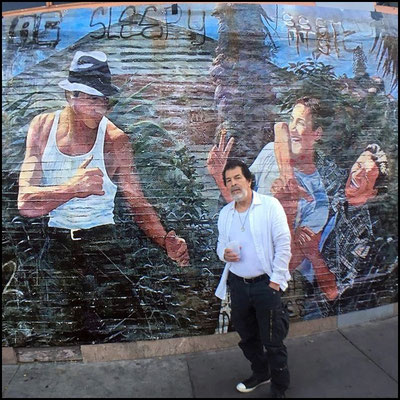
After filming ended, the mural remained for a time at the original East Los Angeles location — a site that would surely be a place of pilgrimage for fans today. Sadly, it was never preserved intact. For reasons unknown, it was later cut into six sections for transport — an irreversible loss to art history.


© Courtesy of Merrick Morton (Official Still Photographer of Blood In Blood Out), 1993
Restoration
In 2015, Adan Hernandez, Jesse Borrego, and David Reyes launched a campaign to restore the painting.
However, they fell far short of their $50,000 goal.

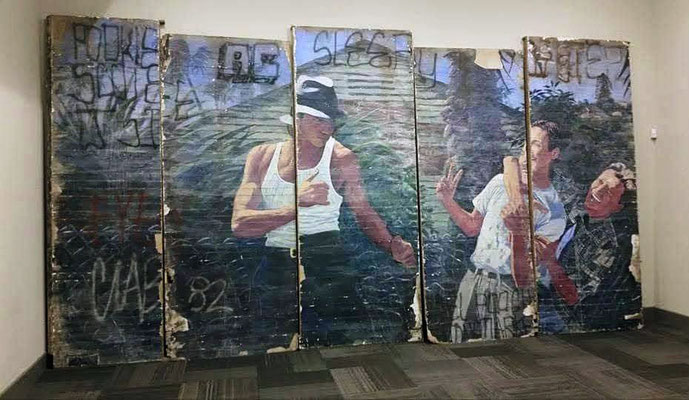

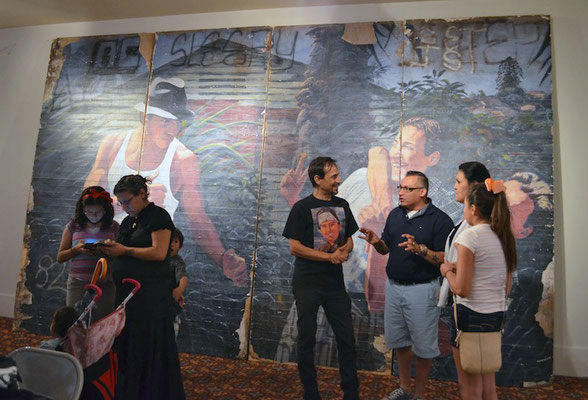
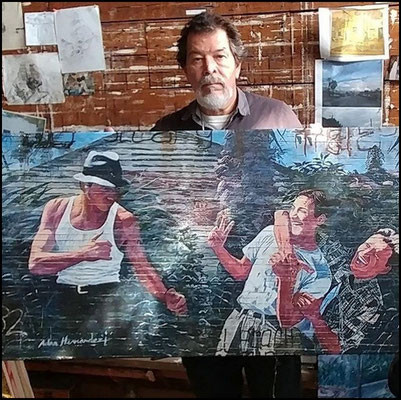
© The mural after deinstallation cut into several pieces, Courtesy of Adan Hernandez
Digital Restoration
The unsuccessful original restoration motivated us — as the curators of this website — to begin a digital restoration of the mural in 2016. By that time, we had already been collaborating with Adan for several years to share his work with audiences around the world. The restoration process took several days, carried out with great care and respect for his vision. As a gesture of trust and appreciation, Adan entrusted us with the rights to his images, allowing us to preserve and present his legacy faithfully, and ensuring that his work would continue to inspire future generations.
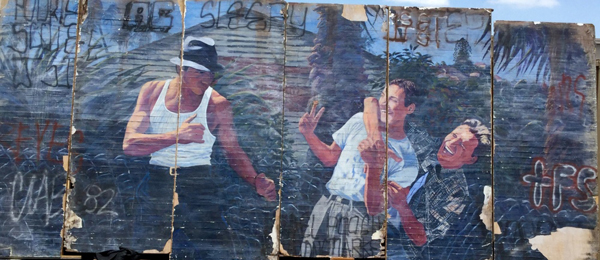

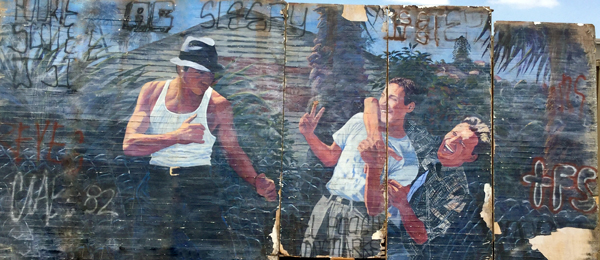


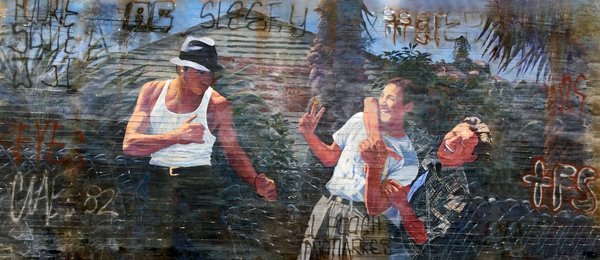
© Timelapse of the digital restoration in 2016, Courtesy of Johannes Spiegler
Technique
There were rumors that Adan had simply printed the original image and painted over it. In reality, that would have been technically impossible on a wooden surface — even today, such a process would be overly complex and prohibitively expensive.
It is far more likely that Adan employed a method known since the Old Masters, transferring the composition section by section, to scale, using preparatory drawings or “cartoons.” Michelangelo used this approach for his frescoes, working in buon fresco directly onto wet plaster, while Gerhard Richter later adapted modern techniques by projecting images onto canvas.
Leonardo da Vinci perfected another, complementary approach — the sfumato technique (from the Italian for “smoky” or “blurred”). It involves building up ultra-thin, translucent layers of paint to soften contours and create a luminous, atmospheric depth — ideal for lifelike skin tones and subtle mood.
Although Adan had no formal academic training, his work shows a deep understanding of these classical methods. He mastered them through curiosity, persistence, and countless hours of experimentation — the essence of any true education in art. Technical skill alone doesn’t define mastery; it’s the ability to achieve a precise artistic vision within a given moment.
Adan did exactly that — proving himself to be one of the finest painters of his generation.
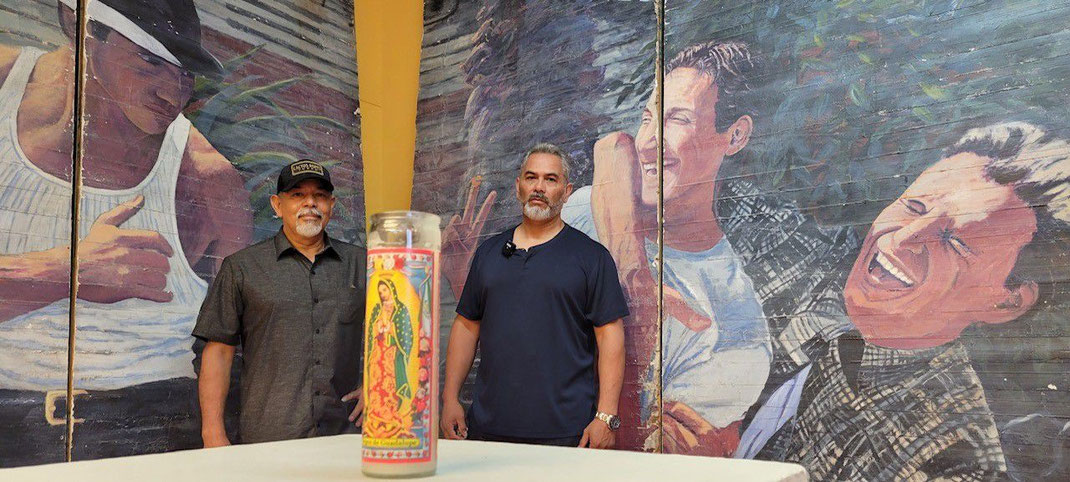
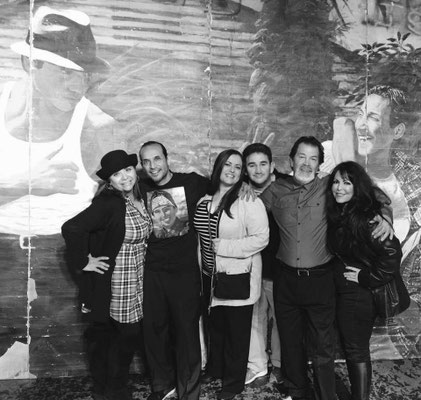
© Adan`s brothers Bert and Armando Hernandez in front of the mural (Photo credit: Jose Arredondo)
Carnalismo`s Afterlife
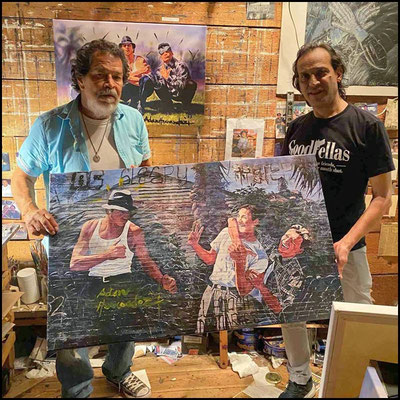
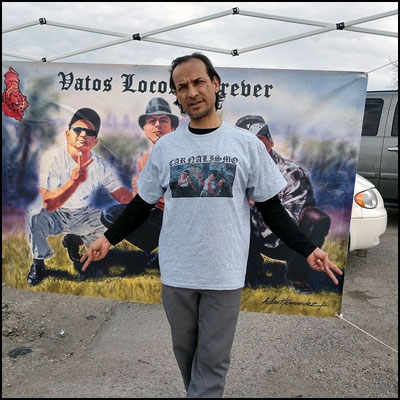
Adan and Jesse Borrego presented the mural at numerous conventions, and sold it as posters, prints, skateboards, face masks, and t-shirts. Fans even printed it on cupcakes and cakes, which surprised us greatly. But we were aware of the cultural significance of the motif.

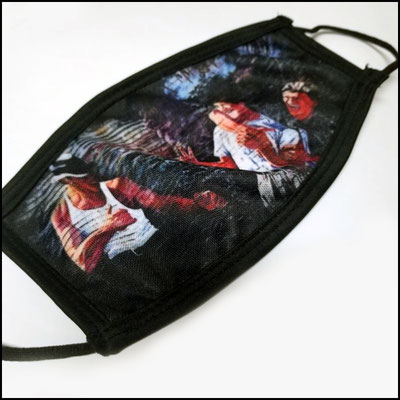
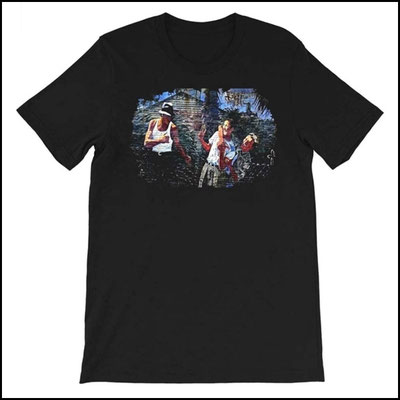
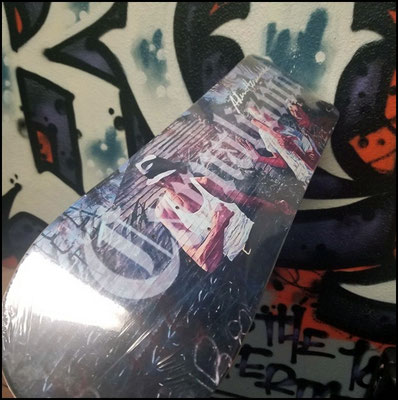

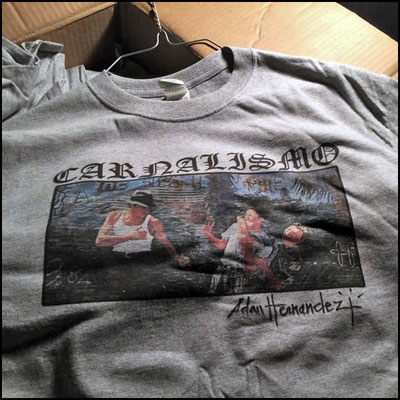


© Courtesy of BillyTheKid-Entertainment / The Estate of Adan Hernandez